🎯 Why Use Our Fighter Jets Ranking Tool?
In the rapidly evolving landscape of military aviation, staying informed about the world's most advanced
fighter jets is crucial for defense analysts, aviation enthusiasts, and military professionals. Our
interactive fighter jet comparison tool combines cutting-edge data visualization with
user-friendly customization options to help you create professional-quality rankings and infographics in
minutes.
🚀 Real-Time Customization
Instantly preview every change you make. Adjust colors, fonts, layouts, and data with live visual
feedback. No coding required—just click, customize, and export.
📊 CSV Data Import
Easily import your own aircraft data via CSV. Perfect for creating custom rankings, comparing
specific models, or analyzing niche military aviation metrics.
🎨 10 Premium Themes
Choose from professionally designed themes including Cyber Blue, Military Green, Stealth Black, and
more. Each theme optimized for visual impact and readability.
📸 Ultra-HD Export
Generate high-quality PNG images up to 4x resolution. Perfect for presentations, reports, social
media, or print publications.
⚡ Lightning Fast
No account required, no downloads, no waiting. Create and export professional infographics in under
60 seconds from any device.
📱 Fully Responsive
Works flawlessly on desktop, tablet, and mobile devices. Create stunning visualizations wherever you
are.
✈️ Understanding Modern Fighter Jet Classifications
The world of military aviation operates on a sophisticated generational classification system that helps
categorize fighter aircraft based on their technological capabilities, combat effectiveness, and operational
features. Understanding these classifications is essential for properly evaluating and ranking modern
fighter jets.
5th Generation Fighter Jets: The Current Elite
Fifth-generation fighters represent the pinnacle of current military aviation technology.
These aircraft combine multiple revolutionary capabilities that set them apart from all previous
generations. The defining characteristics include advanced stealth technology that makes them nearly
invisible to most radar systems, sophisticated sensor fusion that integrates data from multiple sources into
a unified tactical picture, and supercruise capability allowing sustained supersonic flight without
afterburners.
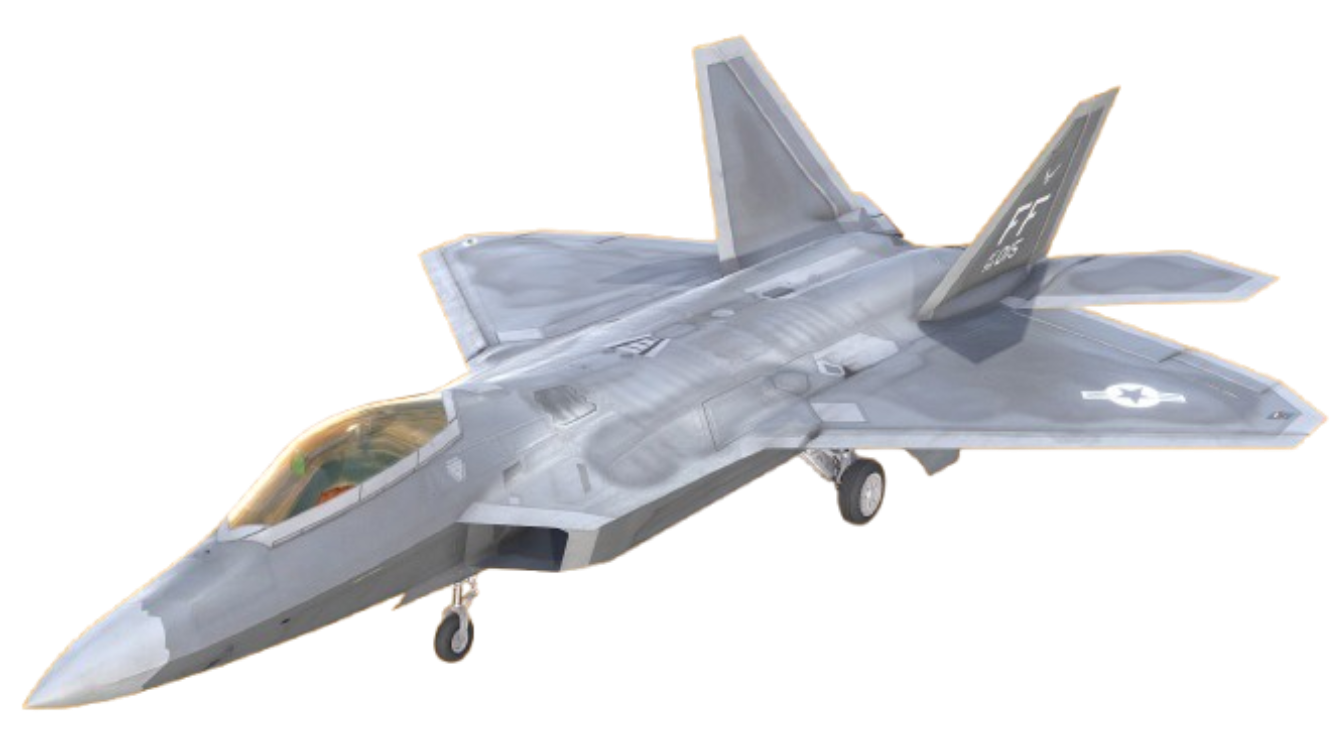
The F-22 Raptor stands as the world's first operational 5th generation
fighter and remains unmatched in pure air superiority missions. With its thrust-vectoring engines, advanced
avionics, and unparalleled stealth characteristics, the F-22 can detect, track, and engage enemy aircraft
long before being detected itself. The United States Air Force maintains approximately 186 operational
F-22s, each representing a $150 million investment in cutting-edge military technology.
Meanwhile, the F-35 Lightning II has become the most prolific 5th
generation fighter with over 1,000 aircraft delivered worldwide. Unlike the F-22's focus on air superiority,
the F-35 emphasizes multirole versatility and network-centric warfare. Its advanced sensor suite and data
fusion capabilities make it function as a flying intelligence platform, gathering and distributing tactical
information across entire battle networks. The F-35 operates in three variants: the conventional takeoff
F-35A, the short takeoff/vertical landing F-35B, and the carrier-based F-35C.
China's J-20 Mighty Dragon represents Beijing's entry into the exclusive
5th generation fighter club. While initial production models faced challenges with engine technology, recent
upgrades including domestically-produced WS-15 engines have significantly enhanced the J-20's performance.
The People's Liberation Army Air Force has rapidly expanded J-20 squadrons, fundamentally shifting the air
power balance in the Indo-Pacific region.
Russia's Su-57 Felon combines advanced aerodynamics with 3D thrust
vectoring nozzles for exceptional maneuverability. While its stealth characteristics are less refined than
Western counterparts, the Su-57 compensates with high-tech sensors, impressive raw performance, and
versatile weapons loadout capabilities. Cost-effectiveness has been a key selling point, with estimates
suggesting per-unit costs significantly lower than comparable American aircraft.
4.5 Generation Fighters: The Proven Warriors
Fourth-generation-plus or 4.5 generation fighters bridge the gap between legacy platforms
and true 5th generation capabilities. These aircraft incorporate modern avionics, AESA (Active
Electronically Scanned Array) radars, advanced electronic warfare systems, and improved weapons integration
while lacking comprehensive stealth features.
France's Dassault Rafale exemplifies the 4.5 generation philosophy with its omnirole design
capable of air superiority, ground attack, reconnaissance, and even nuclear deterrence missions. The
Rafale's SPECTRA electronic warfare suite provides comprehensive threat detection and countermeasures across
electromagnetic, laser, and infrared domains. Combat-proven in operations over Libya, Mali, Iraq, and Syria,
the Rafale has secured major export contracts with India, Egypt, Qatar, Greece, Indonesia, and the United
Arab Emirates.
The Eurofighter Typhoon represents European defense cooperation at its finest, developed
jointly by the United Kingdom, Germany, Italy, and Spain. With its delta-wing canard configuration and
powerful Eurojet EJ200 engines, the Typhoon achieves a thrust-to-weight ratio that makes it one of the most
agile fighters in the world. The aircraft's supercruise capability and advanced Captor-E AESA radar ensure
it remains competitive despite lacking true stealth characteristics.
Sweden's Saab JAS 39 Gripen E takes a different approach, emphasizing cost-effectiveness,
rapid deployment, and network-centric warfare. Designed to operate from short runways and highway strips,
the Gripen E features sophisticated electronic warfare systems and can be rearmed and refueled by a small
crew in under 10 minutes. Its advanced datalink capabilities allow it to share targeting information with
other platforms, multiplying combat effectiveness.
🔬 Critical Technologies Defining Modern Fighter Jets
Stealth Technology: Invisible Warriors
Stealth technology represents perhaps the single most revolutionary advancement in modern
fighter design. Rather than a single feature, stealth involves a comprehensive approach including airframe
shaping to deflect radar waves, radar-absorbent materials (RAM) applied to critical surfaces, internal
weapons carriage to eliminate external radar signatures, and sophisticated electronic countermeasures.
The F-22 Raptor's radar cross-section (RCS) is estimated to be comparable to a metal marble, making it
virtually invisible to most conventional radar systems. This allows the F-22 to penetrate defended airspace,
engage targets, and exit before enemy forces realize an attack has occurred. The practical combat advantage
is staggering—in training exercises, F-22s routinely achieve kill ratios exceeding 100:1 against 4th
generation opponents.
Sensor Fusion: The Digital Battlefield
Sensor fusion technology aggregates data from multiple sources—onboard radar, infrared
sensors, electronic warfare systems, and datalinks from other aircraft—into a unified tactical picture. The
F-35's Distributed Aperture System (DAS) consists of six infrared cameras providing 360-degree situational
awareness, while its AN/APG-81 AESA radar can track multiple targets simultaneously while maintaining Low
Probability of Intercept (LPI) characteristics.
This integrated sensor suite transforms the F-35 from merely a fighter into a flying intelligence,
surveillance, and reconnaissance (ISR) platform. Data collected by F-35s can be instantly shared with allied
aircraft, ground forces, and naval vessels, creating a comprehensive operational picture that provides
decisive tactical advantages.
Electronic Warfare: The Invisible Battle
Modern electronic warfare (EW) systems represent a critical but often underappreciated
aspect of fighter capability. Advanced EW suites like the Rafale's SPECTRA or the Gripen E's integrated
systems can detect, identify, locate, and counter enemy threats across the electromagnetic spectrum. These
systems provide both defensive protection—jamming enemy radars and missiles—and offensive
capabilities—suppressing enemy air defenses and disrupting communications.
Supercruise and Propulsion
Supercruise capability—sustained supersonic flight without afterburners—provides significant
tactical advantages. Aircraft can maintain high speeds while conserving fuel, extend combat radius, and
reduce infrared signatures that make them vulnerable to heat-seeking missiles. The F-22, Typhoon, and Rafale
all feature supercruise capabilities, with the F-22 capable of sustained speeds around Mach 1.8 without
afterburners.
📈 Global Fighter Jet Market and Production Trends
The global fighter aircraft market is experiencing unprecedented dynamics as nations modernize their air
forces to address emerging threats. According to defense industry analysts, worldwide military aviation
spending exceeded $90 billion in 2025, with fighter aircraft procurement representing the largest single
category.
The F-35 program continues its dominance with current orders exceeding 3,700 aircraft for
the United States and allied nations. Partner countries including the UK, Italy, Netherlands, Australia,
Norway, Denmark, Canada, and Japan have committed to substantial F-35 purchases. Recent additions include
Poland, Czech Republic, Finland, and Switzerland, expanding the F-35's global footprint.
China's military aviation industry has emerged as a formidable competitor, with domestic production of
advanced fighters accelerating rapidly. The J-20 program alone has seen production exceed 200 aircraft, with
analysts projecting total numbers could reach 500 or more by 2030. Additionally, China's new J-35
carrier-based stealth fighter and mysterious J-36 sixth-generation concept demonstrate Beijing's aggressive
push for technological parity with Western air forces.
European manufacturers have achieved significant export success despite lacking true 5th generation
offerings. The Rafale has secured orders totaling over 500 aircraft from both domestic and international
customers. Similarly, the Typhoon program has delivered more than 600 aircraft to European operators and
export customers including Saudi Arabia, Oman, Kuwait, and Qatar.
🌍 Regional Air Power Dynamics
Indo-Pacific Theater
The Indo-Pacific region represents the most dynamic and contested airspace in the world.
China's rapid military modernization, including mass production of J-20 stealth fighters and development of
sixth-generation concepts, has prompted significant responses from regional powers and the United States.
Japan operates both F-35A and F-35B variants while developing its domestic F-3 next-generation fighter in
partnership with international collaborators. South Korea's KF-21 Boramae program has progressed to serial
production, representing Seoul's first domestically-produced advanced fighter. Australia has committed to
purchasing 72 F-35As and is exploring additional fighter capabilities to maintain regional air superiority.
India fields a diverse fighter fleet including Russian Su-30MKI aircraft, French Rafales, and indigenous
Tejas fighters, while negotiating for additional advanced platforms. The Indian Air Force seeks to modernize
its combat aircraft inventory to maintain credible deterrence against both China and Pakistan.
European Theater
Russia's invasion of Ukraine has fundamentally reshaped European air power priorities. NATO
members have accelerated fighter modernization programs, with Poland ordering 32 F-35As, Germany committing
to F-35 purchases for nuclear sharing missions, and Finland selecting F-35s to replace legacy Hornets.
The Ukraine conflict has provided valuable combat data on modern air warfare, particularly regarding the
effectiveness of integrated air defense systems, the challenges of establishing air superiority against peer
competitors, and the critical importance of electronic warfare capabilities.
Middle East
The Middle East represents one of the world's most lucrative fighter aircraft markets. Gulf
states have procured advanced Western fighters including F-35s (UAE), F-15 variants (Saudi Arabia, Qatar),
Rafales (UAE, Qatar, Egypt), and Typhoons (Saudi Arabia, Oman, Kuwait, Qatar).
Israel operates the largest F-35I Adir fleet outside the United States, with approximately 50 aircraft
delivered and configured with Israeli-specific electronic warfare systems and weapons integration. Israeli
F-35s have conducted numerous combat sorties over Syria and reportedly participated in operations across the
broader Middle East, marking the type's most extensive combat employment to date.
🔮 Future Developments: Sixth Generation and Beyond
The race toward sixth-generation fighters is already well underway, with multiple nations
pursuing next-generation air dominance programs. The United States leads with two parallel efforts: the Air
Force's Next Generation Air Dominance (NGAD) and the Navy's F/A-XX program. Both initiatives emphasize
manned-unmanned teaming, artificial intelligence integration, directed energy weapons, and revolutionary
propulsion systems.
Europe's Future Combat Air System (FCAS), developed jointly by France, Germany, and Spain, targets a 2040
initial operating capability. The program envisions a system-of-systems approach with manned fighters
operating alongside unmanned "loyal wingman" drones, connected through advanced networking and AI-enabled
decision support.
The UK's Tempest program, developed in partnership with Italy, Sweden, and Japan, similarly pursues
sixth-generation capabilities including optional manning, swarming drones, hypersonic weapons integration,
and advanced electronic warfare systems capable of cyber attack operations.
China's mysterious J-36 program, glimpsed in late 2024 satellite imagery and ground photos,
appears to pursue a radically different sixth-generation design philosophy. The tailless, diamond-wing
configuration suggests emphasis on long-range strike missions and advanced stealth characteristics rather
than traditional air superiority dogfighting capabilities.
💡 How to Use This Fighter Jet Ranking Tool Effectively
Step 1: Choose Your Data Source
Start by deciding whether to use the default ranking data or import your own custom dataset via CSV. The
default data includes the top 8 most advanced fighter jets with their key technological features. For custom
comparisons—perhaps focusing on specific regional air forces, comparing costs, or analyzing particular
capability metrics—prepare a CSV file with your desired aircraft and specifications.
Step 2: Customize Visual Design
Select from 10 professionally designed themes or create your own color scheme using the custom color picker.
Consider your intended use case: presentations might benefit from high-contrast themes like Cyber Blue or
Military Green, while printed materials might work better with Arctic or Sunset themes. Adjust typography,
spacing, and layout options to match your brand or publication style.
Step 3: Configure Export Settings
Choose your export quality based on intended use. Standard resolution (1x) works well for web publishing and
social media. High quality (2x) provides crisp display on high-DPI screens and professional presentations.
Ultra HD (3x) and Print Quality (4x) settings generate images suitable for large format printing, posters,
or publication in professional media.
Step 4: Generate and Share
Click the Generate Image button to create your custom infographic. The tool processes your design in
real-time, producing a high-quality PNG file ready for immediate download. Share your creation on social
media, incorporate it into presentations, or use it in research papers and defense analysis reports.
📚 Additional Resources and Related Tools
Expand your capabilities with our complete suite of professional visualization tools:
- NovaBuildr Homepage - Explore all
available tools and resources
- Military Comparison Tools - Compare tanks, ships, weapons systems, and more
- Data Visualization Suite - Create charts, graphs, and infographics for any dataset
- Template Library - Pre-designed layouts for presentations and reports
🎓 Pro Tips for Best Results
- Use high-quality source images: The tool works best with clear, high-resolution
aircraft photos
- Keep text concise: Technology descriptions work best when limited to 2-4 key
features
- Consider your audience: Technical audiences appreciate detailed specifications,
while general audiences prefer simplified comparisons
- Export at highest quality: Storage is cheap—always generate at maximum resolution
for future flexibility
- Save your CSV data: Keep a master spreadsheet of aircraft specifications for quick
updates and variations
❓ Frequently Asked Questions
What is the best fighter jet in 2026?
The F-35 Lightning II is widely considered the most advanced fighter jet in 2026 due to its superior sensor
fusion capabilities, network-centric warfare features, and widespread deployment across allied nations. With
over 1,000 aircraft delivered, the F-35 combines stealth, advanced avionics, and multirole versatility.
However, the F-22 Raptor remains unmatched for pure air superiority missions, particularly in contested
airspace where its exceptional stealth and kinematic performance provide decisive advantages.
How does stealth technology work in modern fighter jets?
Stealth technology employs multiple complementary approaches to reduce detectability. Aircraft shaping
deflects radar waves away from source emitters, radar-absorbent materials absorb rather than reflect
electromagnetic energy, internal weapons carriage eliminates external radar signatures, and sophisticated
flight profiles minimize infrared and acoustic signatures. The result is a dramatic reduction in detection
range—a stealth fighter might only be detected at 20-30 miles versus 100+ miles for conventional aircraft.
Can I export my fighter jet ranking infographic?
Yes! The tool provides instant PNG export with four quality settings ranging from standard web resolution to
4x print quality. Simply click the "Generate Image" button after customizing your design. The export
includes all visual elements, custom colors, and data exactly as displayed in the preview. Files are
generated client-side with no server upload, ensuring privacy and immediate availability.
What fighter jets are included in this ranking tool?
The default ranking includes eight of the world's most advanced fighter jets: F-22 Raptor (USA), F-35
Lightning II (USA), J-20 Mighty Dragon (China), Su-57 Felon (Russia), Dassault Rafale (France), Eurofighter
Typhoon (Europe), F-15EX Eagle II (USA), and Saab Gripen E (Sweden). You can customize this list by
importing your own CSV data to compare different aircraft, focus on specific regions, or analyze particular
capabilities.
Is this fighter jet comparison tool free to use?
Absolutely! The Elite Fighter Jets Ranking Tool is completely free with no account required, no downloads,
and no limitations. Create unlimited infographics, experiment with all themes and customization options,
import custom data, and export images at maximum quality—all at no cost. We believe professional-quality
visualization tools should be accessible to everyone interested in military aviation.
Which countries have 5th generation fighter jets?
As of 2026, only three countries operate domestically-produced 5th generation stealth fighters: the United
States (F-22, F-35), China (J-20, J-35), and Russia (Su-57). However, the F-35's extensive international
sales mean many allied nations also operate 5th generation capabilities, including the United Kingdom,
Japan, South Korea, Australia, Israel, Italy, Netherlands, Norway, Poland, and others. This distribution
fundamentally shapes global air power balance and alliance structures.
How accurate are fighter jet rankings?
Fighter jet rankings involve inherent subjectivity because "best" depends on mission requirements,
operational context, and evaluation criteria. An aircraft optimized for air superiority may underperform in
ground attack missions, while cost-effectiveness matters more for some operators than absolute performance.
Our tool focuses on technological sophistication and combat capabilities while acknowledging that real-world
effectiveness depends on pilot training, supporting infrastructure, tactics, and integration with broader
military systems.
Can I use this tool for commercial presentations?
Yes! All infographics generated with this tool are yours to use in commercial presentations, reports,
publications, social media, or any other application. We only ask that you consider crediting NovaBuildr
when appropriate. The tool exists to help defense analysts, journalists, educators, military professionals,
and aviation enthusiasts create compelling visual content that communicates complex information effectively.
How often is the fighter jet data updated?
We continuously monitor military aviation developments and update the default ranking data to reflect the
latest intelligence on fighter capabilities, technological upgrades, and operational deployments. Major
updates typically occur quarterly, with emergency updates for significant developments like new aircraft
unveilings or substantial capability upgrades. Users can always import the most current data via CSV if they
have access to more recent information.